Cultural Education in Times of Tight Budgets
Evaluating Education Projects of the Brandenburg State Orchestra Frankfurt (Oder)
In autumn 2025, the IKMW (Institute for Cultural and Media Research) completed its evaluation of the Brandenburg State Orchestra Frankfurt (Oder) (BSOF)’s latest series of education projects, entitled „Spannungsfelder“ („Areas of Tension“). (The IKMW report can be downloaded here.)
The „Spannungsfelder“ projects were developed during the final months of the COVID-19 pandemic. They had to be implemented under a dual challenge: reduced funding compared to previous BSOF education projects and the widespread uncertainty affecting all areas of society as a result of the pandemic and its consequences.
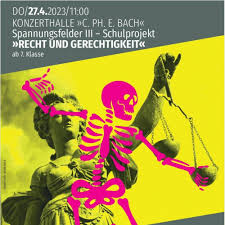
The „Spannungsfelder“ projects were developed during the final months of the COVID-19 pandemic. The societal uncertainty was thus consistently addressed in the artistic content: Each iteration of the „Spannungsfelder“ series focused on a tension between seemingly contradictory or ambivalent concepts: „Musik und Technik“ („Music and Technology“, 2020/21), „East Meets West“, 2021/22), „Recht und Gerechtigkeit“ („Law and Justice“, 2022/23), „Lüge und Wahrheit“ („Lies and Truth“, 2024/25), and „Angst und Mut“ („Fear and Courage“, 2024/25).
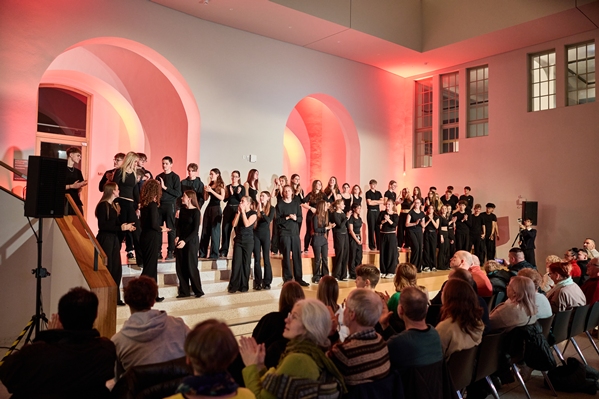
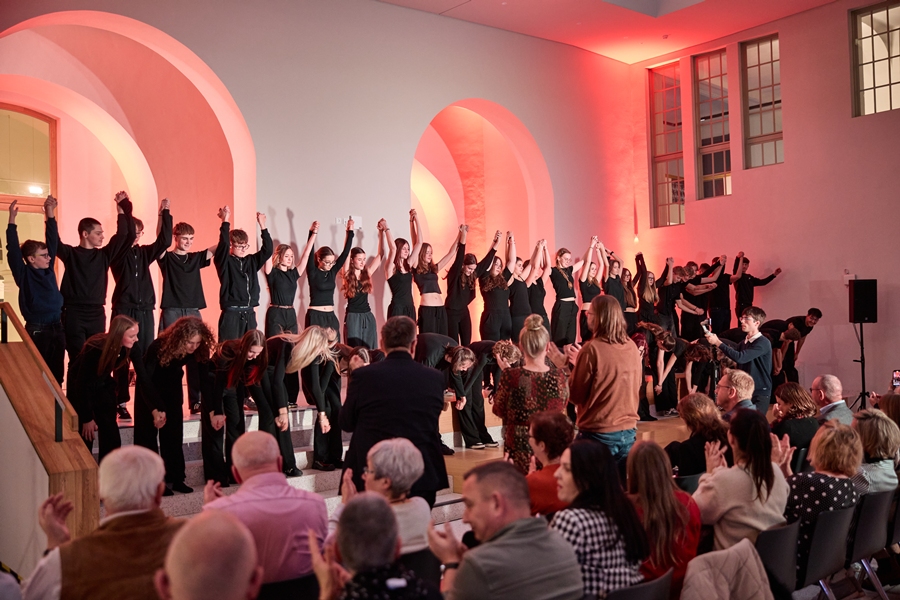
A musical program was conceived around each of these pairs of concepts. Under the direction of Howard Griffith and an internationally experienced choreographer, interdisciplinary music and performance pieces were developed and presented to large audiences by students from a German school in Frankfurt (Oder) and a Polish school from the partner city of Słubice.
Due to reduced funding following the end of the Swiss Drosos Foundation’s support for BSOF’s education projects in 2019, the „Spannungsfelder“ projects were implemented with fewer students and without the intensive rehearsals at the schools throughout the school year. However, the aspect of German-Polish cooperation was more pronounced. The number of German and Polish students in the new projects was roughly equal, making successful bilingual and trilingual collaboration crucial to the projects‘ success. It was therefore logical that these cross-border cooperation projects in the rural German-Polish border region were funded under the EU’s Interreg program.
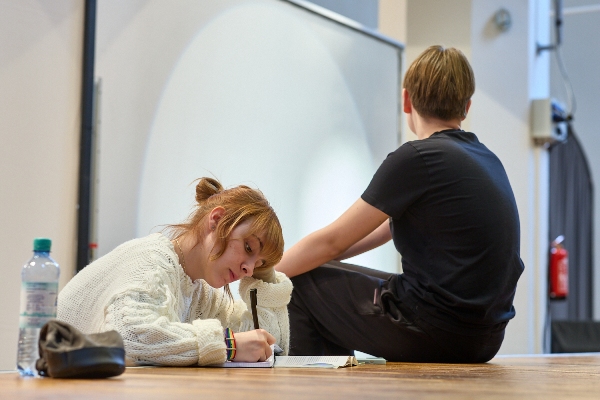
Even with reduced funding and increased challenges, BSOF remained committed to implementing projects that provide formative experiences for the participating students and thus serve as models for other or future projects. The IKMW evaluation demonstrated that impressive and effective educational projects can be realized even with more limited resources: While the shortened development and rehearsal periods understandably resulted in less perceived freedom to experiment and develop new skills, the students‘ pride in their achievements and the positive feedback from their families were comparable to those of previous large-scale projects.
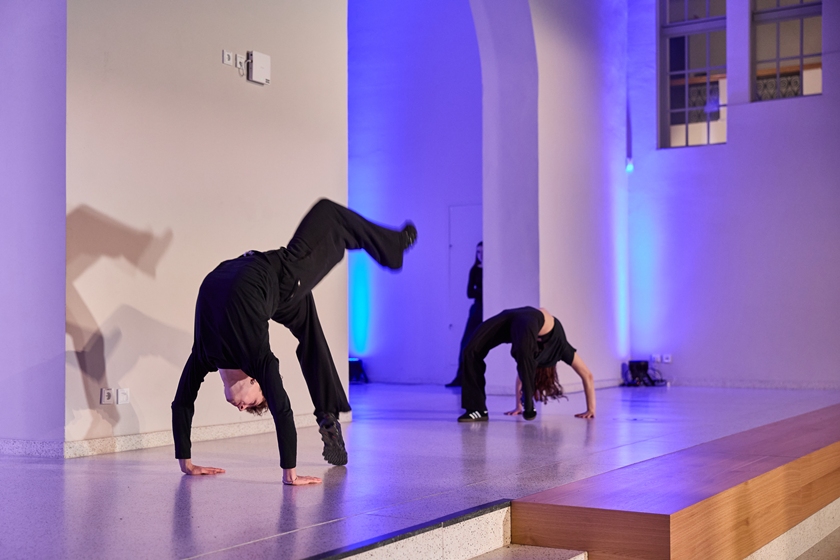
The aforementioned limitations also highlight the fact that smaller projects, given the smaller group sizes and limited development and rehearsal time, require even more careful conception, planning, and implementation.
The success factors identified by the IKMW can be summarized as follows: The interplay of the two ancient cultural techniques of play and celebration is crucial for the direct impact on the students. The productive combination of artistic play and performative events leads to an experience of freedom and self-determination. Specifically, the following must be ensured:
- The students‘ contribution must be recognizable and tangible for them.
- Key positions such as musical and choreographic direction must be filled by charismatic figures who inspire identification.
- For crucial developmental phases, third-party venues outside the school or cultural institution should be sought.
- The students‘ partners in the artistic process should be professional artists with an approachable, pedagogical attitude.
- Full-fledged pieces and narratives should be developed and performed on equally full-fledged stages.
- Multilingual collaboration should be facilitated by multilingual staff or interpreters and by specific group-building methods.
To have a lasting impact beyond individual projects, the interplay between school, home, orchestra, choreographers, and intermediary organizations should be understood and shaped as an educational ecosystem. This means:
- The formal educational space of the school remains the central site of activity. Relationships with partner schools and ongoing communication with school administration and teachers are essential foundational work.
- Cultural institutions act as incubators and accelerators. To ensure continuity as a platform for ever-new projects, cultural education should be permanently anchored in the budget and organizational structure.