
How 300 Teachers Became a Neural Network
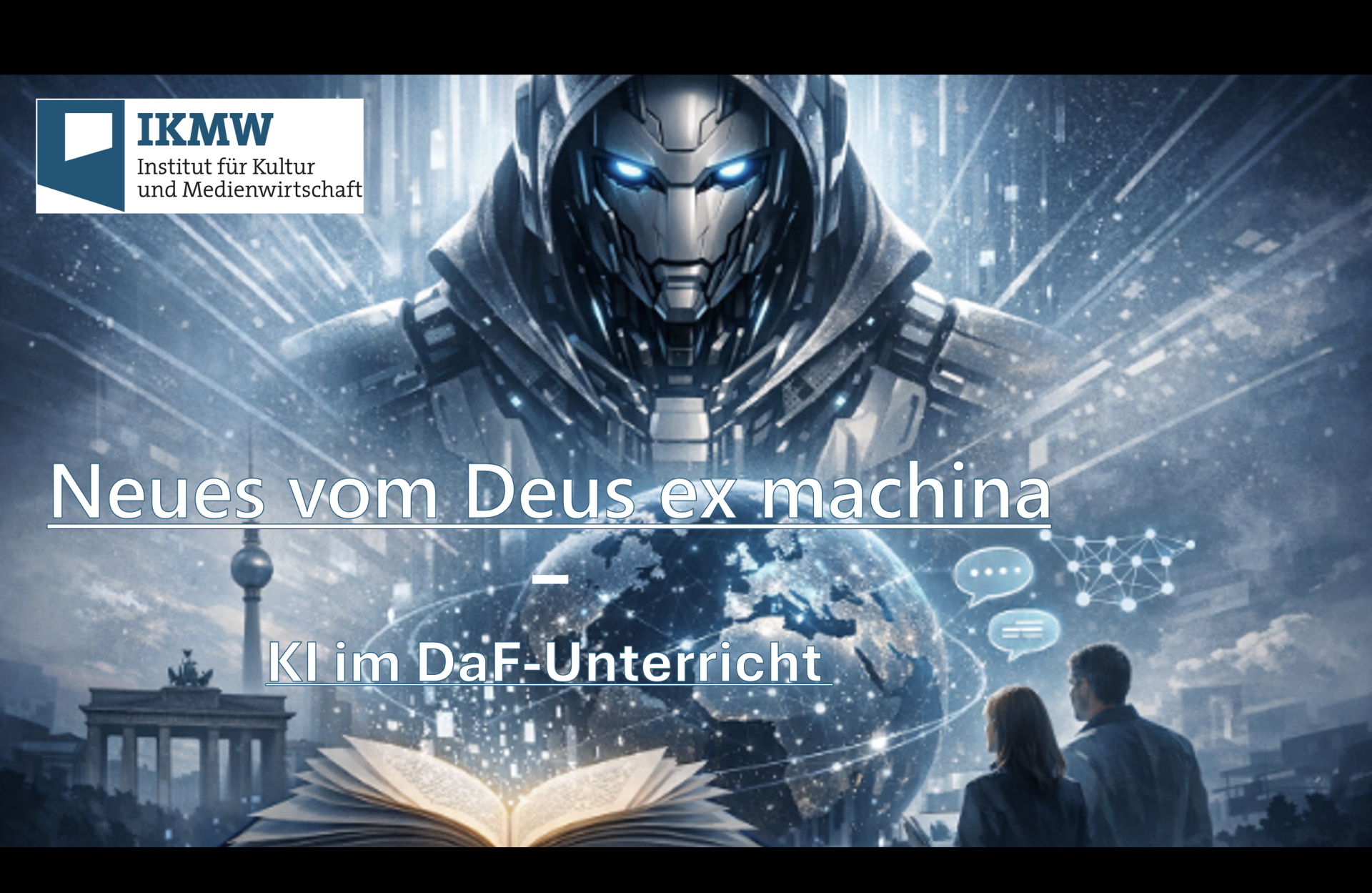
AI, Theater, and Cultural and Media Education at the German Teachers‘ Conference in Bulgaria
Pazardzhik, Bulgaria | April 17–19, 2026
The moment feels almost surreal: nearly 300 German teachers point the lights of their mobile phones toward the stage of a concert hall in Pazardzhik. A pulsating network of points of light emerges from the audience—as if the room itself had transformed into a neural system.
What initially appears to be a theatrical intervention is actually part of a presentation on artificial intelligence, cultural-media education, and the future of German language education.
As part of the 34th conference of the Bulgarian Association of German Teachers, Stephan Reischl—our Director of Cultural-Media Education—delivered a plenary lecture and conducted two multi-hour workshops on AI, theater pedagogy, and creative teaching formats, commissioned by the Goethe-Institut Sofia.
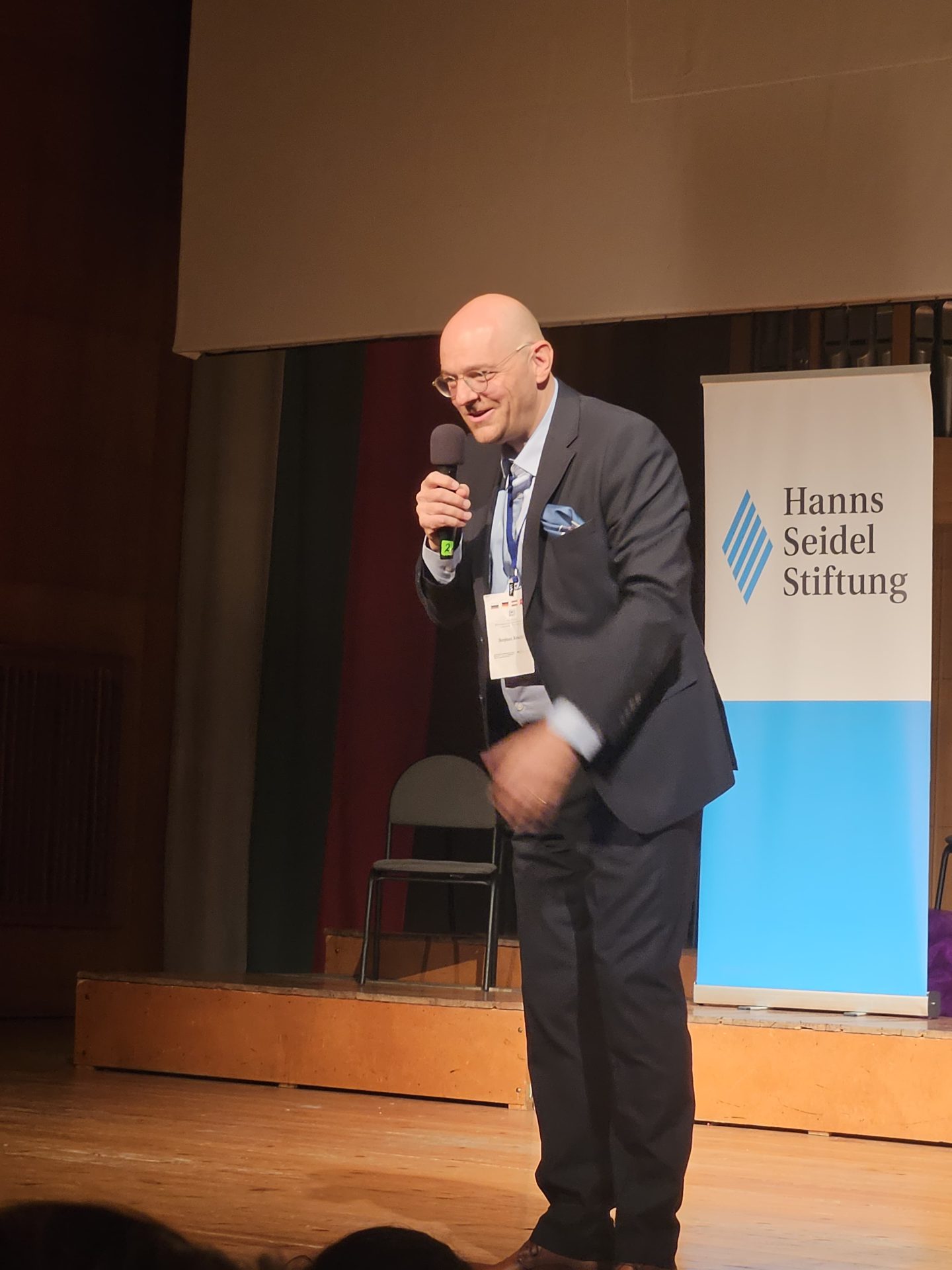
Titled „News from the *Deus ex Machina*: AI in German Language Teaching,“ Reischl’s presentation combined perspectives from cultural history, theater pedagogy, and media studies with current questions regarding the role of teachers in the age of generative AI.
The focus was not merely on technical development, but on the nature of presence, creativity, and pedagogical stance: What happens when machines begin to simulate language, images, and even human communication? What role remains for teachers in a world of algorithmic systems? And how do teaching, perception, and learning processes change through AI-supported communication?
Drawing on the character Walther von Stolzing from Richard Wagner’s *Die Meistersinger von Nürnberg*, Reischl developed the concept of a „Stolzing Effect“—a metaphor for the tension between rules and innovation, tradition and creative renewal.
The presentation combined a traditional lecture format with performative elements, choral interventions, and moments of deliberate disruption. AI-generated voices, theatrical transitions, and collective actions temporarily transformed the lecture hall itself into a performative learning environment.
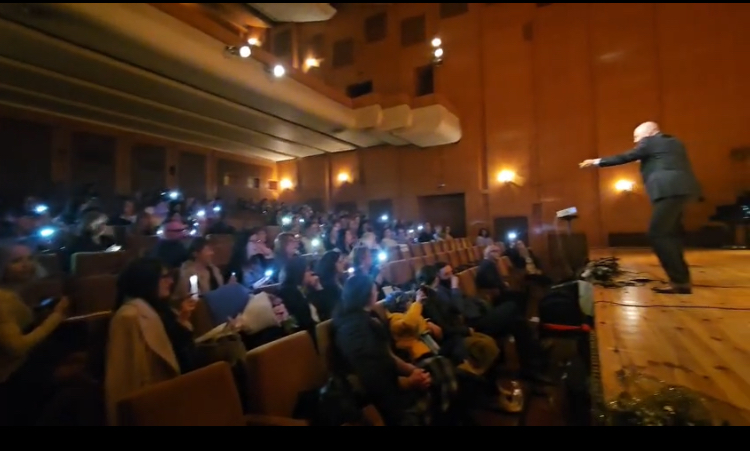
(300 teachers forming the „neural network“)
In two subsequent workshops titled „Quo vadis, Creativity?“ (incorporating the acronym AI), participants gained practical insights into creative, AI-supported teaching and theater formats. The sessions focused on hybrid learning spaces, documentary theater forms in German as a Foreign Language (DaF) instruction, and ways to integrate creative writing, media, and performance processes with AI tools.
This work builds upon numerous international projects conducted by the IKMW in the field of cultural and media education. For years, the institute has been collaborating with international partners to develop analog, hybrid, and digital formats at the intersection of theater, media, language, and cultural education.
Especially in times of profound technological change, the event in Pazardzhik demonstrated that cultural education can be far more than the mere transmission of knowledge: It can serve simultaneously as a space for experience, a space for reflection, and a collaborative field for experimentation.
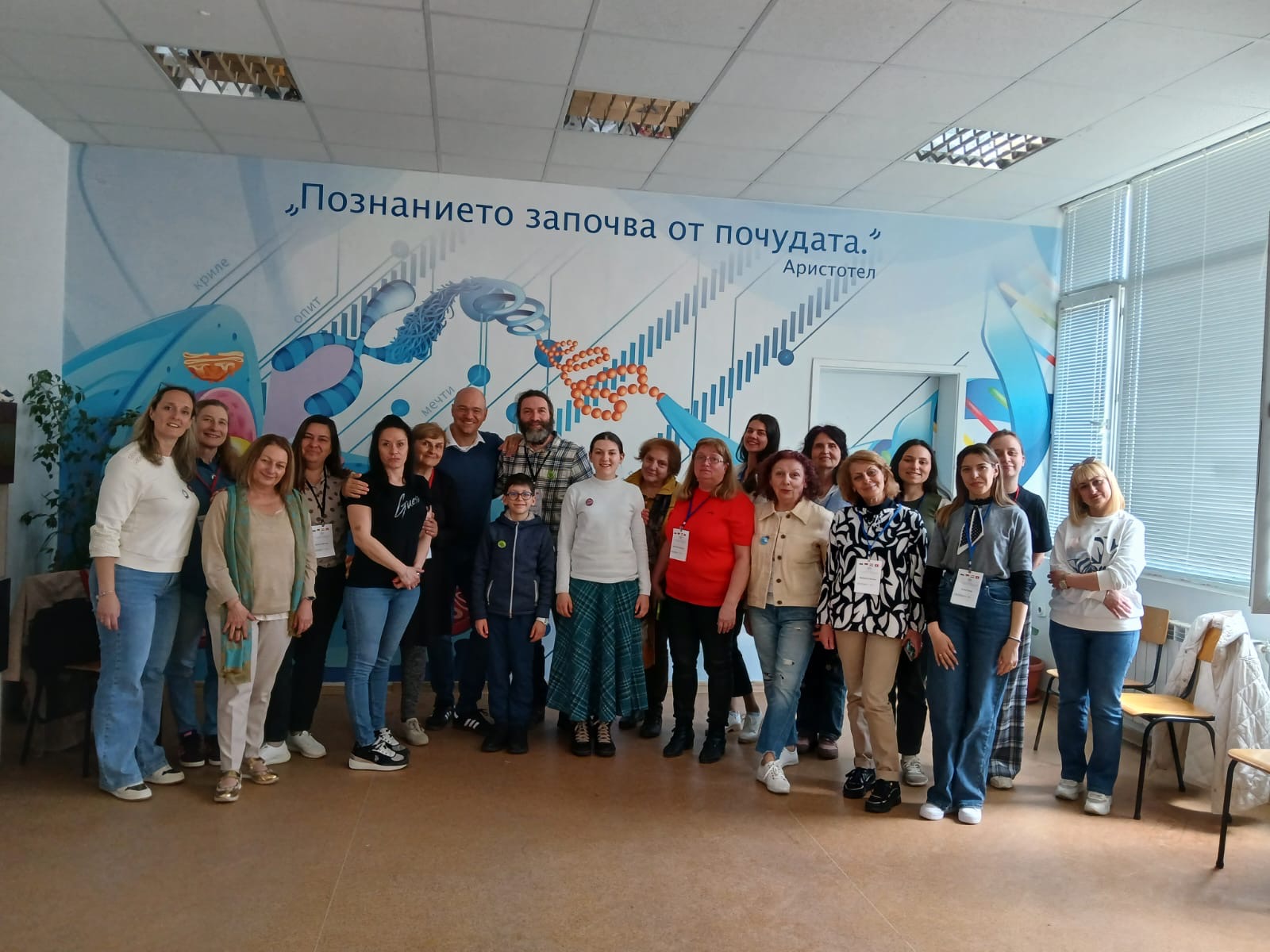
(The workshop)