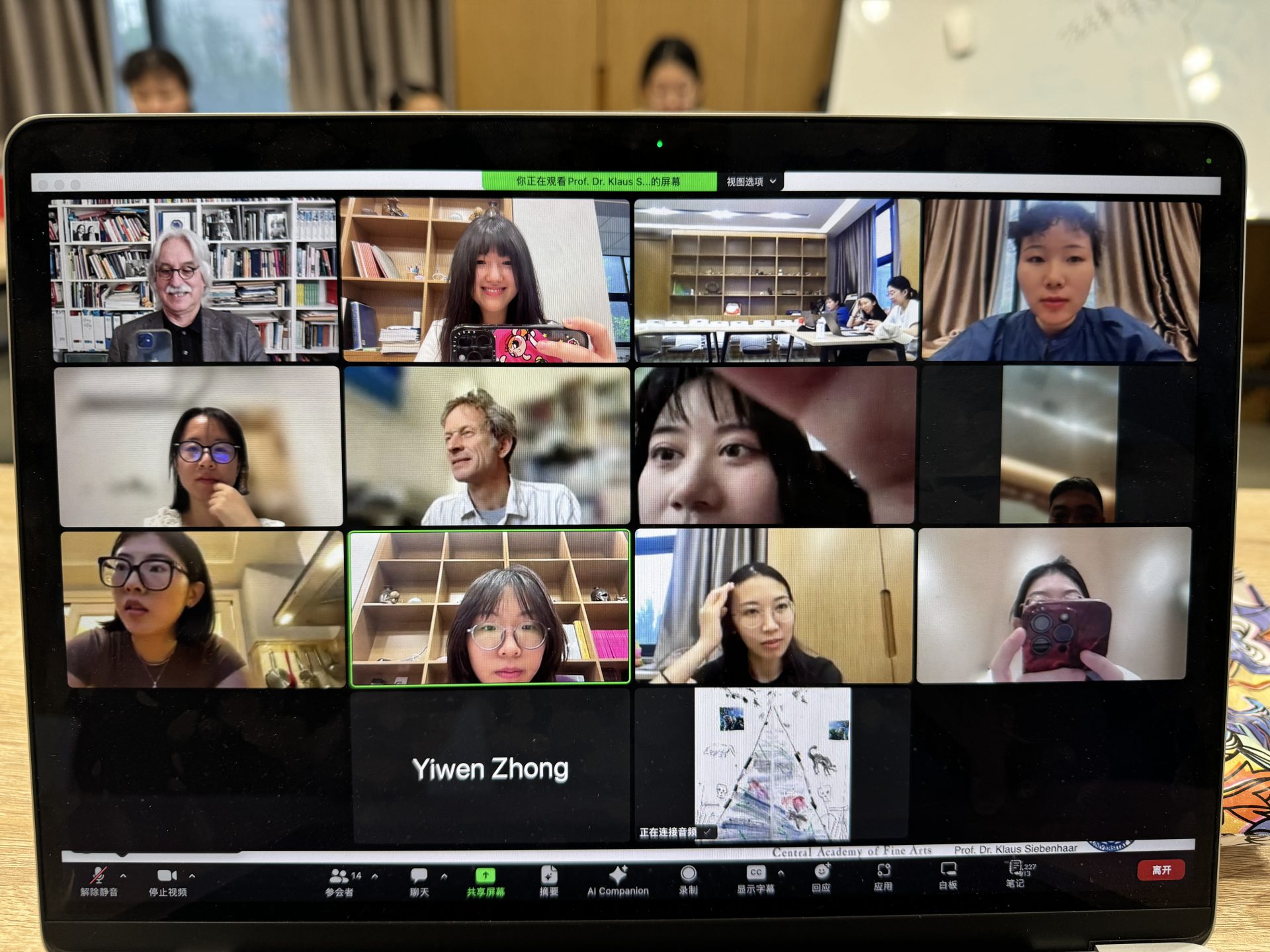
The relationship between Art and Life, between artefact and reality in its embedded and non-embedded manifestations are starting point and ongoing tension of artistic production since Antiquity. The research seminar held at the Central Academy of Fine Arts (CAFA) in Beijing in the Winter semester of 2023 focused this constitution of artistic challenge in very different „case studies“. (The seminar plan for download: CAFA_Winter23-24_Lecture Plan)
Orienting on Sherlock Holmes‘ deduction and, respectively, scientific methods of analysis, the Students took on the roles of „detectives“.
A three-hour live-stream from the Humboldt-Forum was the practical climax, with program director Jan Linders vividly presenting the programatic and institutional challenges of a multi-disciplinary arts institution open to society. (Students‘ observations from the visit can be found here: CAFA_Winter23-24_Observations on the Humboldt Forum)
In February 2024, the Chinese „detectives“ the Chinese students, working in groups of five, will document their case studies and potential answers from their perspective, their observatons and searches for evidence – narratively and multimedia-based.
„Art = Life and Life = Art“
Der Zusammenhang von Kunst und Leben, von Artefakt und Realität in seinen gebundenen und ungebundenen Manifestationen ist Ausgangspunkt und dauerndes Spannungsverhältnis künstlerischer Produkion seit der Antike. Das im Wintersemester 2023 an der Central Academy of Fine Arts (CAFA) in Peking als Online-Live-Format abgehaltene Recherche-Seminar ging dieser Konstitution künstlerischer Herausforderung in sehr unterschiedlichen „Fallstudien“ nach. (Seminarplan zum Download: CAFA_Winter23-24_Lecture Plan)
Die Studenten schlüpfen dabei in die Rolle von Detektiven, die sich methodisch an Sherlock Holmes‘ Deduktion bzw. an wissenschaftlichen Analyseinstrumentarien orientieren.
Praktischer Höhepunkt war ein dreistündiger Live-Stream aus dem Humboldt-Forum, wo Programmdirektor Jan Linders anschaulich die programmatisch-institutionellen Herausforderungen einer gesellschaftlich offenen, multidisziplinären Kunsteinrichtung vermittelte. (Beobachtungen der Studenten vom Besuch finden sich hier: CAFA_Winter23-24_Observations on the Humboldt Forum)
Im Februar 2024 werden die chinesischen „Detektive“ in fünf Gruppen aus ihrer Perspektive, ihren Beobachtungen und Spurensuchen multimedial und narrativ ihre Fallstudien und potenziellen Antworten dokumentieren.
City – Theatre – Public
Audience and Population Study for the Niedersächsische Staatstheater Hannover published
The Niedersächsische Staatstheater Hannover are one of the most long-standing and largest German Three-Genre-Theater houses, exemplary for artistic diversity and proximity to citizens. Not least because of this it has commissioned this study that is now available as a book.
It is the first comprehensive post-pandemic research, including both the general population and the audience encountered in the performances. It gives insight into the theatre audience’s socio-demographic profiles, residencies and motivations, but also into new orientations or preferences of former visitors.
Beyond the example of the Niedersächsische Staatstheater the research conveys valuable general data-based and contextualized findings for regaining inactive are newly acquiring abstinent target groups.
At the Niedersächsischen Staatstheater Hannover the IKMW together with several departments have already begun to develop concrete measures from the research, to prepare and accompany their implementation. The results are now at hand, the work in the theatres can begin.
Publikums- und Bevölkerungsstudie für die Niedersächsischen Staatstheater Hannover veröffentlicht
Die Niedersächsischen Staatstheater Hannover sind eines der traditionsreichsten und größten deutsche Drei-Sparten-Häuser, die beispielhaft für künstlerische Vielfalt und Bürgernähe stehen. Nicht zuletzt deshalb haben sie die nun als Buch vorliegende Studie in Auftrag gegeben.
Es ist die erste umfassende, die Bevölkerung wie das abendliche Publikum einschließende post-pandemische Untersuchung, die Aufschluss über soziodemographische Profile, Herkunft sowie Motivation des Theaterpublikums, aber auch über Neu- und Umorientierung ehemaliger Besucherinnen und Besucher liefert.
Über das Beispiel der Niedersächsischen Staatstheater hinaus lassen sich – datenbasiert und kontextualisiert – wertvolle, verallgemeinerbare Erkenntnisse für die Rück- und Neugewinnung inaktiver oder abstinenter Publikumsgruppen gewinnen.
In den Niedersächsischen Staatstheater Hannover hat das IKMW bereits mit mehreren Abteilungen begonnen, in Workshops aus den Ergebnissen der Studie konkrete Maßnahmen zu entwickeln, ihre Umsetzung vorzubereiten und zu begleiten. Die Erkenntnisse liegen nun vor, die Arbeit in den Theatern können beginnen.
Achim Müller und Klaus Siebenhaar:
Stadt – Theater – Publikum
Publikums- und Bevölkerungsstudie 2023
Niedersächsische Staatstheater Hannover
B&S SIEBENHAAR VERLAG + MEDIEN OHG
ISBN: 978-3-949111-15-0
25,00 Euro
Besuch von alten Freunden
Erste chinesische Gruppe der Central Academy of Arts (Peking) seit Corona in Berlin
Zum ersten Mal seit der Corona-Pandemie besuchte vom 7. bis 13. August 2023 eine Gruppe von Mitgliedern der Central Academy of Fine Arts in Peking Berlin für eine Feld- und Studienreise. Sie wurden von Prof. Klaus Siebenhaar im Löwenpalais der Stiftung Starke festlich begrüßt und erhielten eine einführende Vortrag zur Kulturlandschaft und den politischen Rahmenbedingungen in Deutschland und der Metropole Berlin.
Kern der Studienreise war ein intensive Besuchsprogramm bei Kulturinstitutionen und -unternehmen in Berlin, von den Jahrtausende der Weltkultur bewahrenden Museen auf Museumsinsel und Kulturforum über die Dokumentation künstlerische Schaffens in Berlin in der Berlinischen Galerie bis zu namhaften Galerien und dem Auktionshaus Grisebach.
Ergänzt wurde das Programm in Berlin mit zwei Exkursionen: Zunächst ging es nach Dessau zum auch in China berühmten Bauhaus – den Meisterhäusern und dem Bauhaus Museum. Danach war Potsdam das Ziel, neben dem „Muss“ Schloss Sanssouci die beiden Geschenke des SAP-Gründers Hasso Plattner an die Stadt: das Museum Barberini mit seinen beeindruckenden Monets und das jüngst wiedereröffnete Das Minsk mit seiner Sammlung von Kunst aus der ehemaligen DDR.
First Chinese Group from the Central Academy of Arts (Beijing) since COVID in Berlin
For the first time since the COVID pandemic a group of members of the Central Academy of Fine Arts (CAFA) in Beijing visited Berlin for a field and study trip. The were greeted by Prof. Klaus Siebenhaar in the festive atmosphere of the Lions‘ Palace of the Foundation Starke. In an introductory lecture they learned about the cultural landscape and political foundations in Germany and the metropolis Berlin.
The core of the trip was an intense program of visits to arts institutions and enterprises in Berlin, from the Museums on Museum Island and the Kulturforum, guarding and presenting thousands of years of world culture, through the documentation of artistic creation in Berlin in the Berlinische Galerie to renowned galleries and he Auction House Villa Grisebach.
The program in Berlin was complemented by two excursions: First to Dessau to see the Bauhaus – the Master Housesand the Bauhaus Museum. Then to Potsdam, to visit the two presents of SAP-founder Hasso Plattner to the city: the Museum Barberini with its astonishing Monets and the just reopened Das Minsk with its collection of art from the former GDR – along with the „must-see“ Sanssouci Palace.
Univversity Courses in Berlin, Mannheim and Beijing
Summer Semester has become the traditionally most intense time for practice-oriented academic teaching.
This holds for seminar „Berlin Montage 1920/2020“ (Klaus Siebenhaar) at the department of philosophy and humanities at the Freie Universität Berlin as well as for the seminar „Audience Development“ for young music business professionals at the Popakademie Baden-Württemberg in Mannheim (Achim Müller).
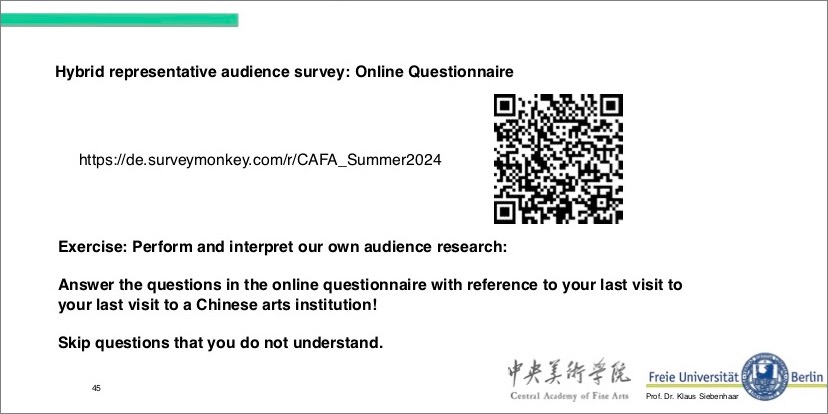
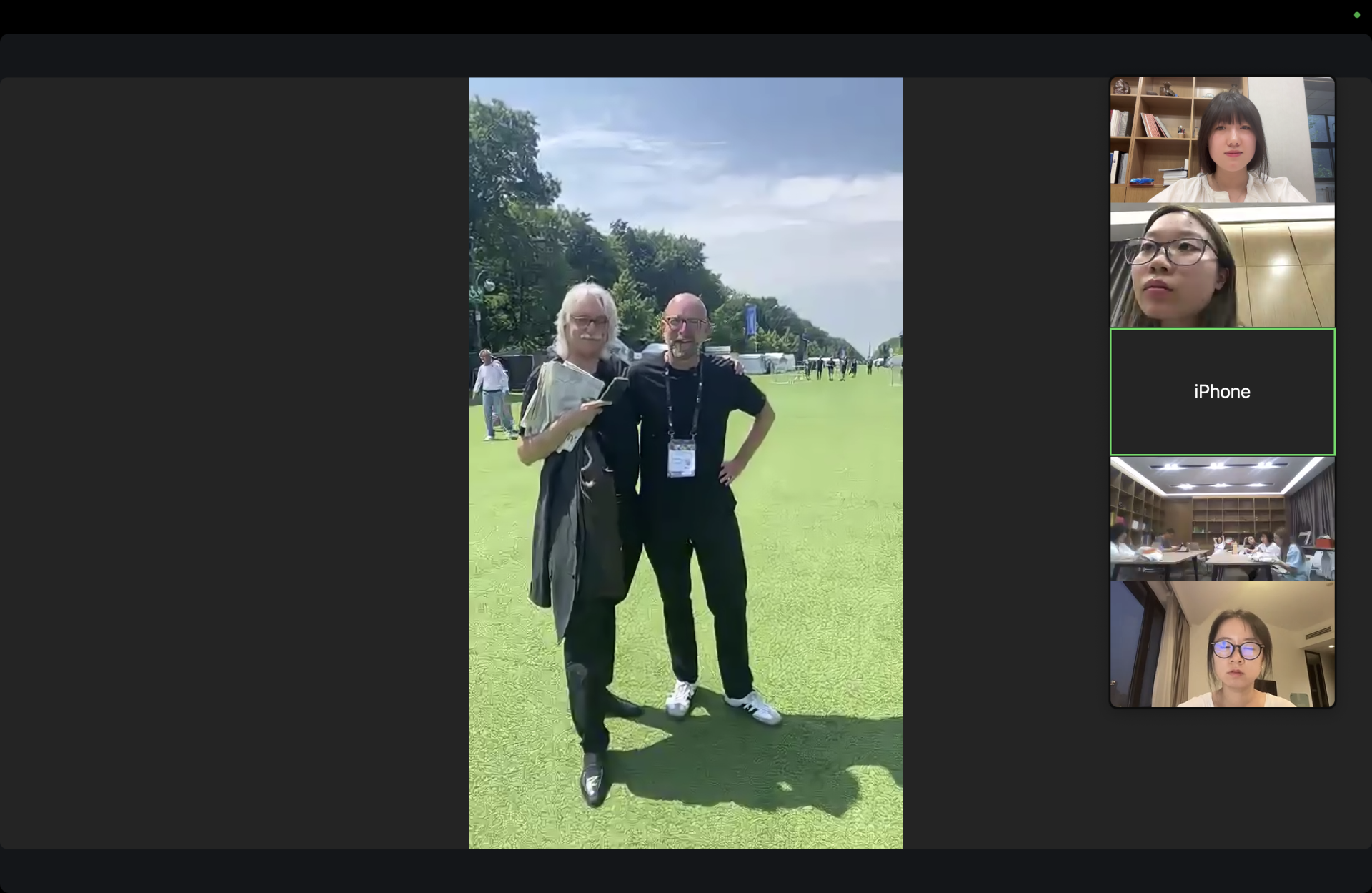
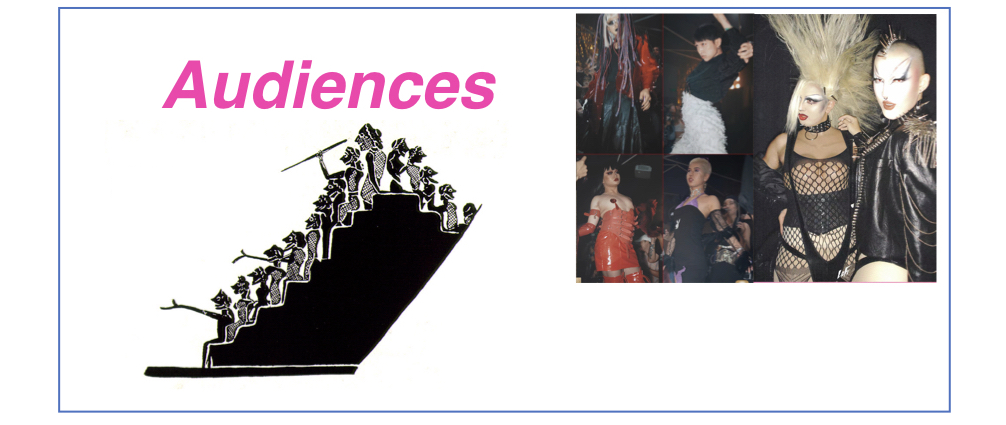
A specific challenge was posed by the 40-hour Zoom-seminar „Western Culture Management: Trends, Topics, Challenges“ at the Central Academy of Fine Arts (CAFA), Beijing, as it combines content in multiple media formats with live streams of several hours, for example from Museum Island, the Humboldt Forum and the House of World Cultures (Haus der Kulturen der Welt) in Berlin as well as the documenta archiv in Kassel, with live discourse formats in Galerie Friese, Kulturprojekte GmbH or with the new managing director of the documenta, Prof. Dr. Andreas Hoffmann, in Kassel (Klaus Siebenhaar/Achim Müller with guests like Jan Linders, Daniel Neugebauer, Moritz van Dülmen, Mona Stehle, Klaus-Gerrit Friese, Martin Groh, Dr. Matthias Henkel).
Wissenschaft und Praxis
Lehrveranstaltungen in Berlin, Mannheim und Peking
Das Sommersemester ist schon traditionsgemäß die intensivste Zeit praxisorientierter akademischer Lehre
Das gilt sowohl für das literaturwissenschaftliche Seminar „Berlin Montage 1920/2020“ (Klaus Siebenhaar) an der Freien Universität Berlin als auch für die musikwirtschaftliche Lehrveranstaltung „Audience Development“ an der Popakademie Baden-Württemberg in Mannheim (Achim Müller).
Eine besondere Herausforderung stellt das rund 40-stündige Zoom-Seminar „Western Culture Management: Trends, Topics, Challenges“ an der Central Academy of Fine Arts (CAFA), Peking, dar, verbindet es doch multimedial aufbereitete Lehrinhalte mit stundenlangen Live-Streams z.B. von der Museumsinsel, dem Humboldt Forum und dem Haus der Kulturen der Welt in Berlin sowie dem documenta archiv in Kassel, mit Live-Diskursformaten in der Galerie Friese, der Kulturprojekte GmbH oder dem neuen documenta-Geschäftsführer Prof. Dr. Andreas Hoffmann in Kassel (Klaus Siebenhaar/Achim Müller mit Gästen wie Jan Linders, Daniel Neugebauer, Moritz van Dülmen, Mona Stehle, Klaus-Gerrit Friese, Martin Groh, Dr. Matthias Henkel).
Timehouse: Where are we NOW?
Chinese-German exhibition in the Löwenpalais, Berlin
On März 31, 2023 a joint exhibition project of the Central Academy of Fine Arts (CAFA), Beijing, the Kunstakademie Düsseldorf, the Freie Universität Berlin, the Institute for Art und Media Industries (IKMW) Berlin and the Art Foundation Starke, Berlin im Löwenpalais, Berlin.
Two weeks the Löwenpalais transforms into a „timehouse“, where the „curatorial team“ formed by students Central Adademy of Fine Arts (CAFA), Beijing engaged in a search for their contemporary time. In five differently themed spaces („anthropocene“, „stages of subculture“, „crisis & survival“, „repair & healing“, „dreams“) the multiple artistic positions and formats from video through installations, photography, billboards to object art reflect the perspectives on the world and the emotional condition of the much-cited „Generation Z“.
48 mostly young artists from China, but also some international emerging artists from the Düsseldorfer art acadmy were invited. In the current post-pandemic era this exhibition is an experiment of a special kind, both in its genesis and its realisation – „distance curating“ with academic advisors and coaching across 10.000 km: teams, artists and a location, where the team could never meet physically as a whole, where only the artists from the Düsseldorf art academy and the academic teachers could walk and see in an analog way.
In this Chinese-German production the Löwenpalais from its lounge, its basement all through to the three traditional exhibition spaces will be used for exhibiting in entirety for the very first time. For the exhibition a booklet is published, comprising the exhibition’s „making of“ as well as the artists presented.
The exhibition is open until April 15, 2023 from 10 am to 5 pm. Address: Kunststiftung Starke, Löwenpalais; Königsallee 30-32; 14193 Berlin. https://stiftungstarke.de/
A video podcast by the Berlin-based Korean Moon Suk gives a lively impression of the exhibition’s opening:
Timehouse: Where are we NOW?
Chinesisch-deutsche Ausstellung im Löwenpalais, Berlin
Am 31, März 2023 wurde im Löwenpalais, Berlin ein gemeinsames Ausstellungsprojekt der Central Academy of Fine Arts (CAFA), Peking, der Kunstakademie Düsseldorf, der Freien Universität Berlin, des Instituts für Kultur und Medienwirtschaft (IKMW) Berlin und der Kunststiftung Starke, Berlin, eröffnet.
Für zwei Wochen verwandelt sich das Löwenpalais in ein „Zeithaus“, in dem sich ein studentisches „Curatorial Team“ der Central Adademy of Fine Arts (CAFA) aus Peking auf die Suche nach seiner Gegenwart begeben hat. In fünf Themenräumen („Transition“, „Underground“, „Crisis & Survival“, „Repair and Healing“, „Dreams“) spiegeln sich in den unterschiedlichen künstlerischen Positionen und Formaten von Video über Installation, Fotos, Poster bis hin zu Objektkunst Welt-Ansichten und Lebensgefühle der viel zitierten „Generation Z“.
Eingeladen wurden 48 zumeist junge Künstlerinnen und Künstler aus China, aber auch der internationale Nachwuchs der Düsseldorfer Kunstakademie. Diese Ausstellung ist sowohl in ihrer Entstehung als auch Realisation ein Experiment der besonderen Art in post-pandemischen Zeiten – „Distance Curating“ unter akademischer Anleitung und Betreuung über 10.000 km hinweg: Teams, Künstler und ein Ort, in dem man sich nie physisch begegnet ist, in dem sich nur das Team der Düsseldorfer Kunstakademie und die Hochschullehrer analog bewegt haben.
Zum ersten Mal wird in dieser deutsch-chinesischen Produktion das gesamte Löwenpalais von der Lounge über den Keller bis zu den drei traditionellen Ausstellungsräumen hin bespielt. Zur Ausstellung wird ein Booklet erscheinen, das das „Making of“ der Ausstellung sowie die Künstlerliste enthält.
Die Ausstellung ist bis 15. April 2023 von 10 bis 17 Uhr zu sehen. Adresse: Kunststiftung Starke, Löwenpalais; Königsallee 30-32; 14193 Berlin. https://stiftungstarke.de/
Einen lebendigen Eindruck von der Eröffnung der Ausstellung gibt eine Reportage im Youtube-Kanal der in Berlin lebenden Koreanerin Moon Suk: